Mathematics
Discover how the Mathematics department builds confident problem solvers through engaging lessons, ICT-enriched learning, and hands-on programmes across Maths, POA, CPA, and Retail Operations.
Department Focus
“Every child is a self-directed learner and creative problem solver.”
– Vision of Mathematics department.
As a department, we work towards enabling our students to apply mathematical concepts and skills in their daily lives. As such, we aim to develop our students to be effective and confident problem solvers and equip them with the ability to think critically.
They will be able to communicate their ideas and thoughts using appropriate mathematical concepts. In addition, they will possess mathematical process skills.
Subjects under Mathematics department: Mathematics, Principles of Accounts (POA), Computer Applications (CPA) and Retail Operations (RO).
Curriculum
Mathematics
The Mathematics Department is committed to developing confident, self-directed learners through the purposeful integration of educational technology. In line with the goals of secondary mathematics education, we strive to:
• ensure that every student achieves a level of mathematical mastery that enables them to apply mathematics confidently in everyday life; and
• nurture students with the interest and aptitude to pursue higher-level mathematics and mathematics-related pathways in their post-secondary education.
Implementation with EdTech Focus
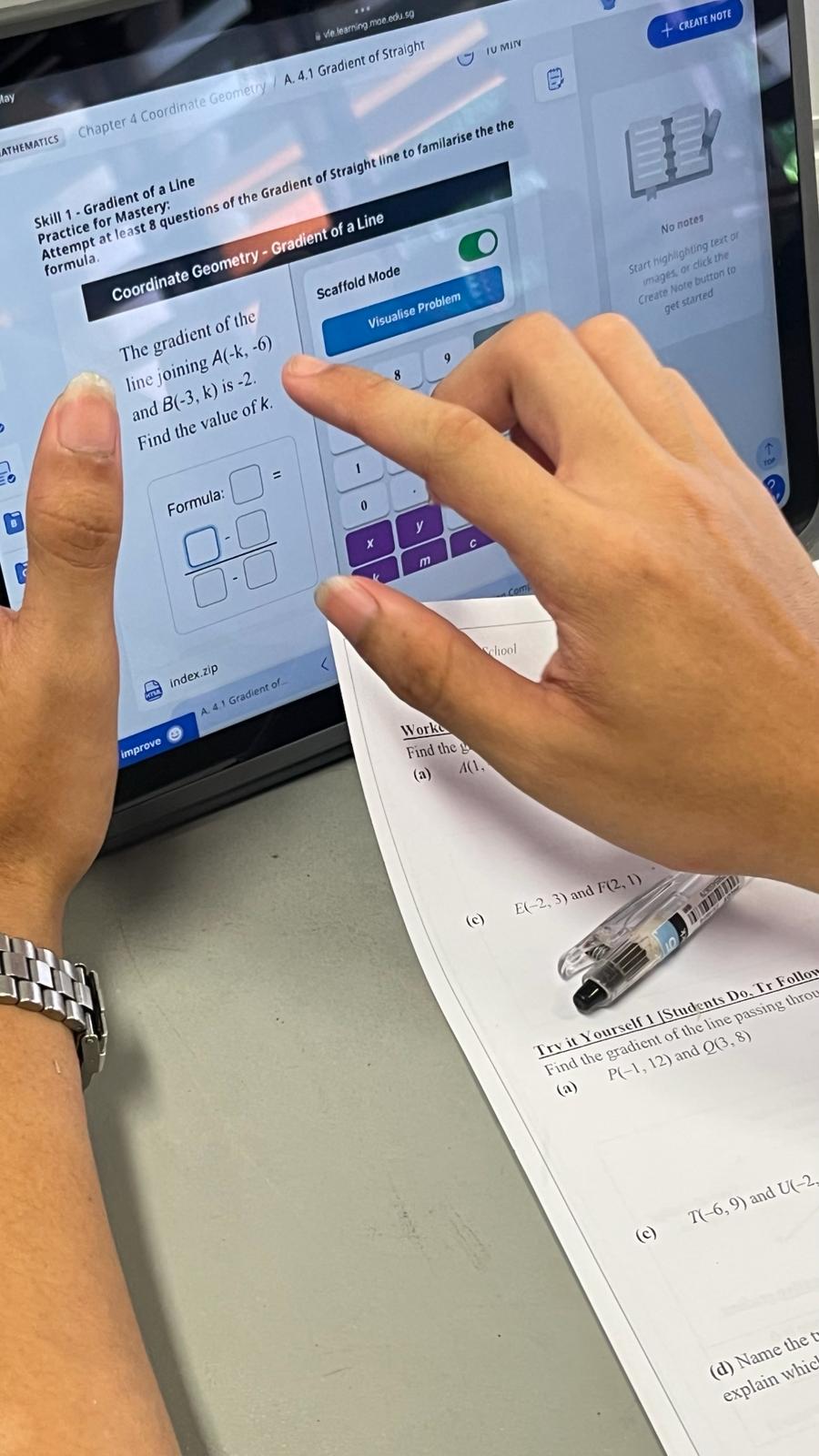
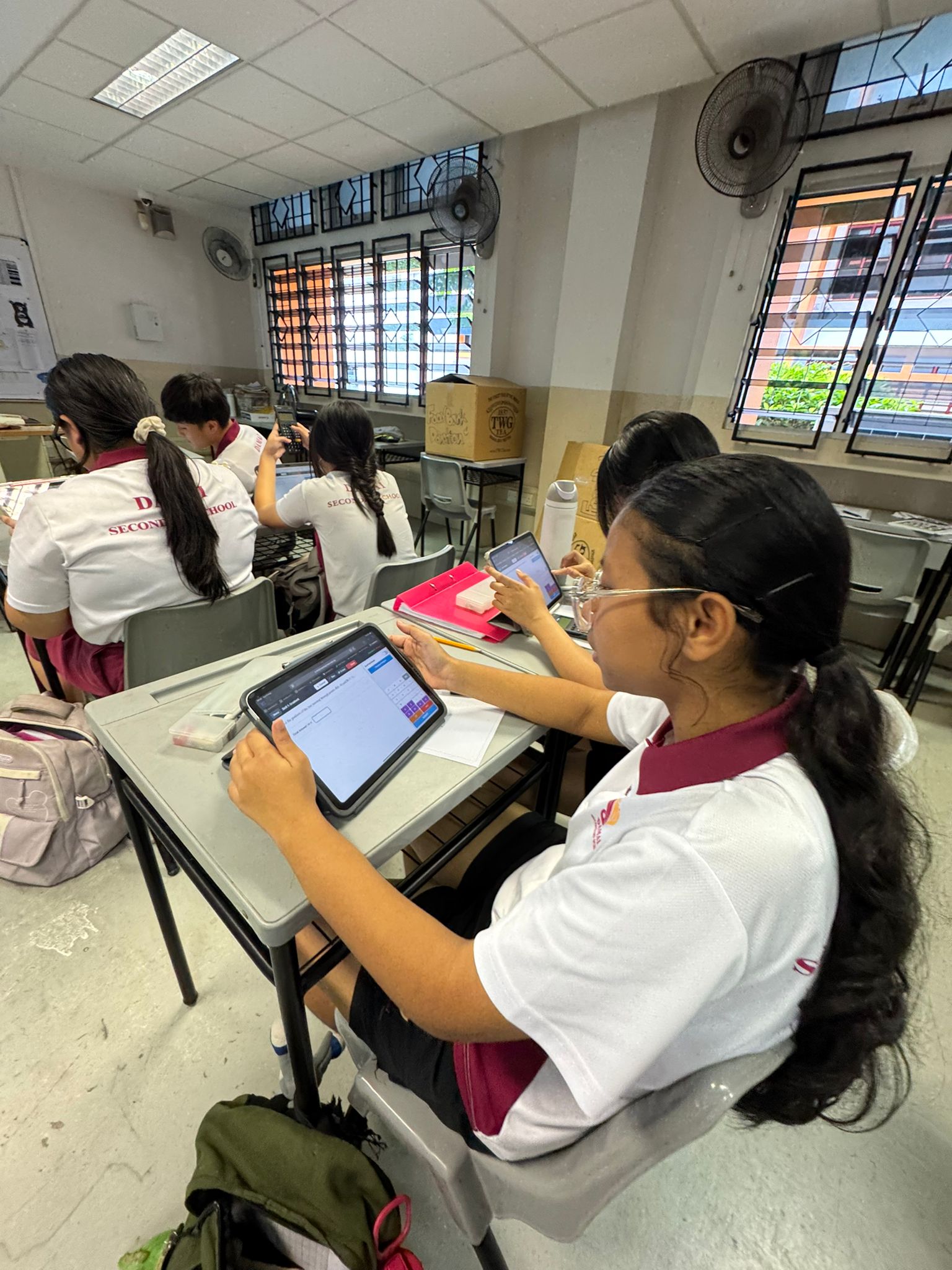
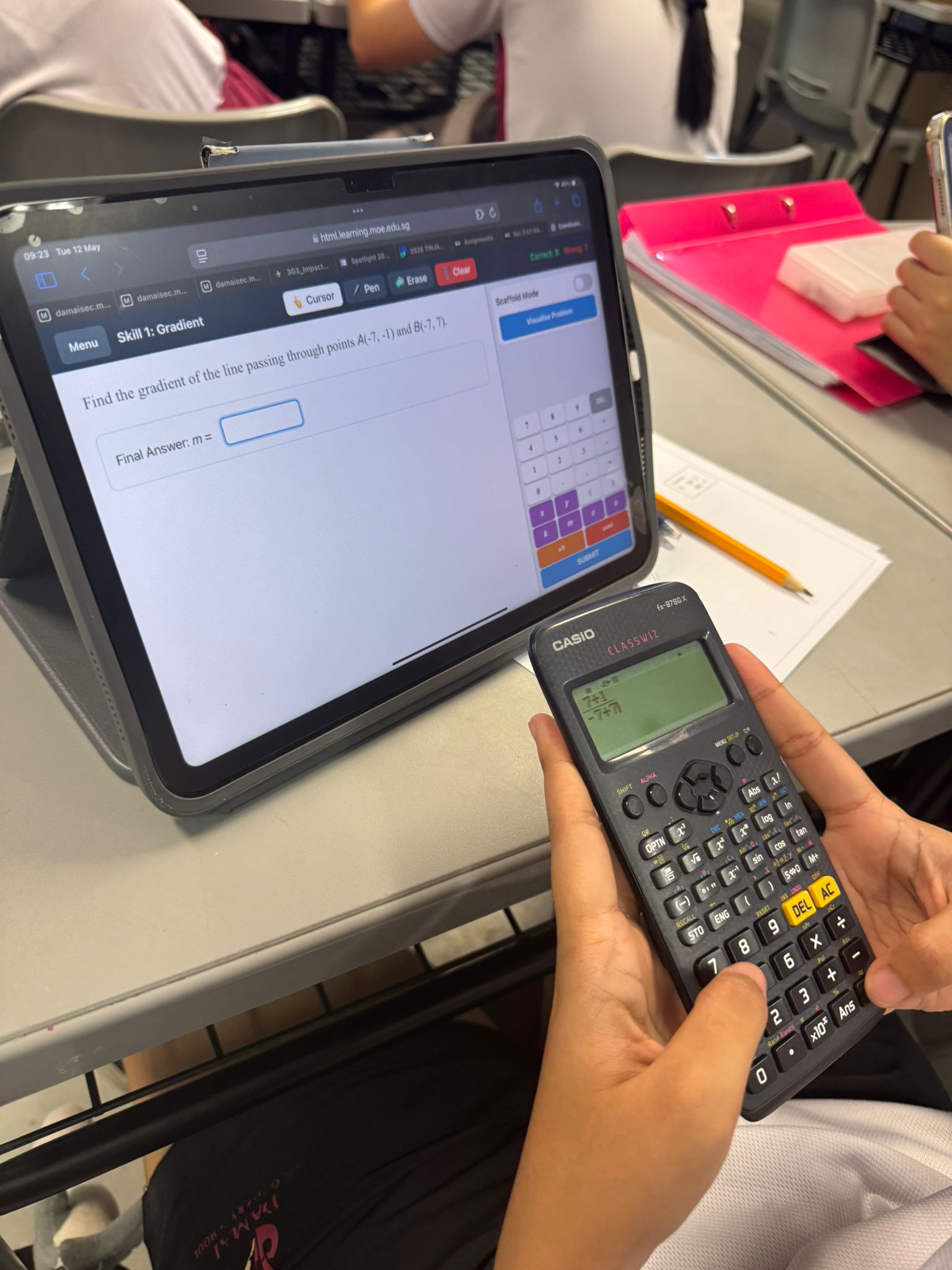
To support Assessment for Learning (AfL) and enhance students' motivation to learn, the department integrates technology into teaching and learning to create meaningful and engaging learning experiences. Through these experiences, students develop a deeper appreciation of mathematical concepts and the connections between them.
Teachers leverage on digital tools to design interactive assessment tasks which provide timely insights into students' understanding. Technology is used to:
• assess students' conceptual understanding through formative assessment tasks;
• monitor students' learning progress continuously;
• provide timely, targeted, and actionable feedback to address learning needs;
• enable students to reflect on their own learning through self-assessment and identify strategies to close their learning gaps.
By embedding educational technology into classroom practices, the department promotes active student participation, encourages reflective learning, and cultivates learners who take greater ownership of their mathematical development. This supports the development of critical thinking, problem-solving skills, and positive learning dispositions that prepare students for future academic and real-world challenges.
Principles of Accounts (POA)
The POA unit adopts a teaching and learning approach which builds on students’ prior knowledge and experiences. Lessons are designed around familiar examples and relatable situations to help students make sense of accounting concepts and apply them meaningfully. Where appropriate, newspaper articles and real-life business examples are used to connect classroom learning to current events and authentic contexts.
Teachers also make deliberate links to previous topics so that students can see how different concepts in the syllabus are connected. This helps students strengthen their understanding, deepen their thinking, and gain confidence in applying accounting knowledge across topics. Through this approach, students are encouraged to become thoughtful, responsible learners who appreciate the relevance of accounting in everyday life and the wider business world.
Computer Applications (CPA)
The CPA lower secondary syllabus focuses on equipping students with fundamental ICT skills that will support the learning of other Normal (Technical) subjects and are useful in their personal lives. At the upper secondary levels, the syllabus focuses on higher-order thinking skills. Students taking CPA will learn problem solving skills and basic programming concepts and skills. Basic programming concepts and skills will be learnt through simple animation and game design, and eventually, applied to solve problems in everyday contexts. This serves to better prepare students for further studies in programming and media-related courses as well as for the work place and future learning. There are six compulsory modules in the subject. These modules are: (1) Computer Fundamentals, (2) Media Elements, (3) Document Processing, (4) Spreadsheets, (5) Multimedia Communication, and (6) Media Computing.
The CPA unit’s teaching and learning approach serves to promote self-directed learning in our students through the use of instructional videos during lessons. Besides using pen and paper mode of assessment, the teachers use ICT tools to make assessment fun, engaging and meaningful to our students.
Retail Operations (RO)
Over a two-year period, Secondary 3 and 4 students in the Normal (Technical) course will learn how to promote a retail store’s products, manage its inventory and learn more about the basics of livestreaming. During these 2 years, there is hands-on learning where students are exposed to the world of retailing through practical and theory lessons in a simulated retail setting, and learn to promote their products online through a livestreaming session.
Retailing skills such as handling and displaying merchandise, managing inventory levels, performing housekeeping duties and the different aspects of online retailing are taught. Students will get to learn more about website building, promoting products and services through short videos and engaging with customers through their own livestream.
Self-directed learning is another characteristic of the syllabus. Students would need to independently research for their practical assessments and presentations.
In a nutshell, the learning objectives of the subject encapsulate the basic retailing skills needed for students to better appreciate and understand the ever-changing industry.
Signature Programmes
As a department, we have organised various signature programmes to engage our students at the different academic levels. This is to make learning of Mathematics fun and engaging so that students can apply the mathematical concepts and skills learnt during curriculum lessons beyond the classroom, into their everyday lives.
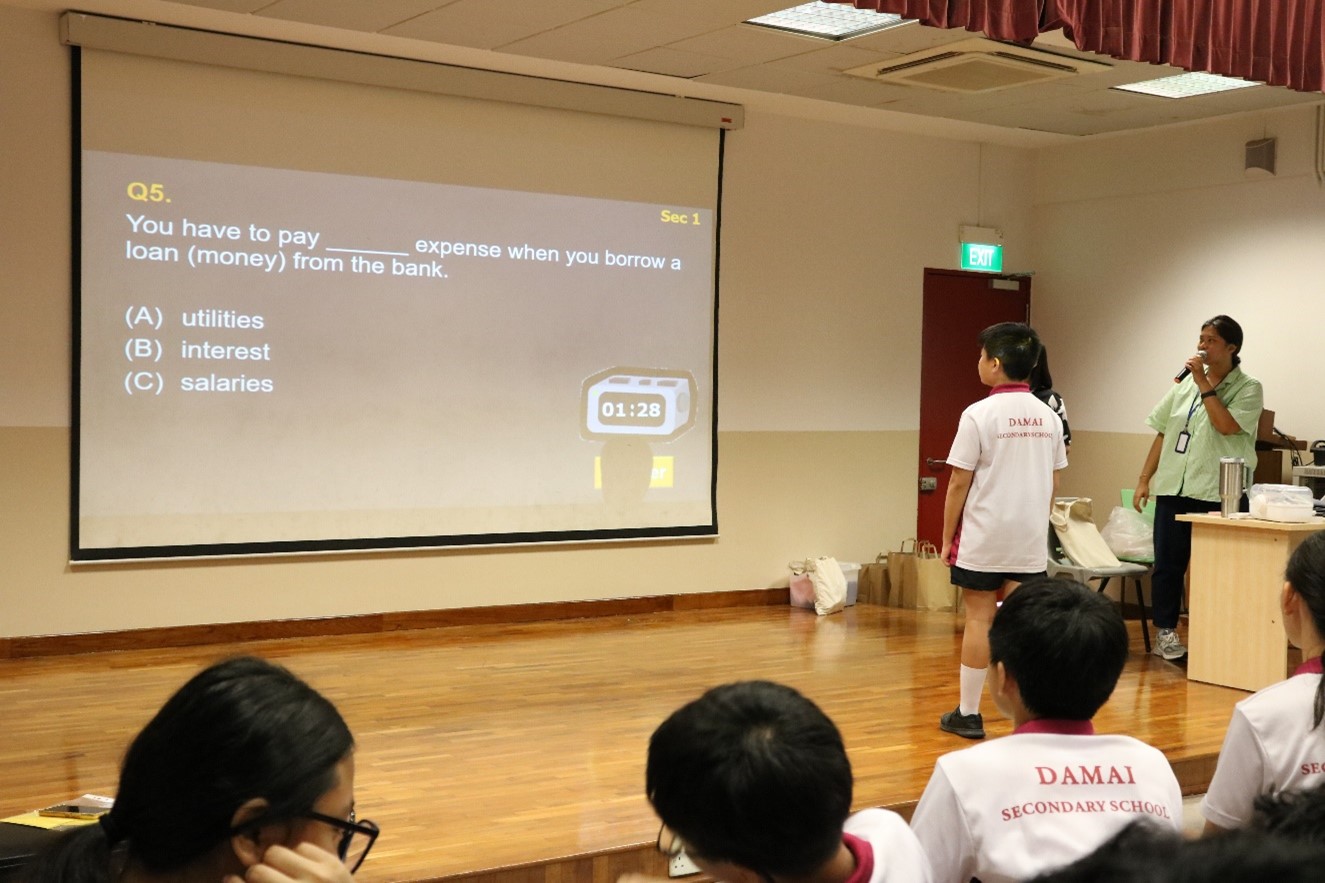
Some examples include the annual Mathematics Assembly Programme. In this programme, we organise various activities to engage the students. The students from different courses come together and work as a team to solve the different quizzes and questions related to Mathematics and Principle of Accounts. As a result, all the students always enjoy themselves and have fun with their classmates during the programme.
In class, we adopt different modes of teaching to suit students of different readiness and interests. For example, we adopt Differentiated Instruction during lesson times so that all the students can benefit from the differentiated scaffolding and support provided to them.